
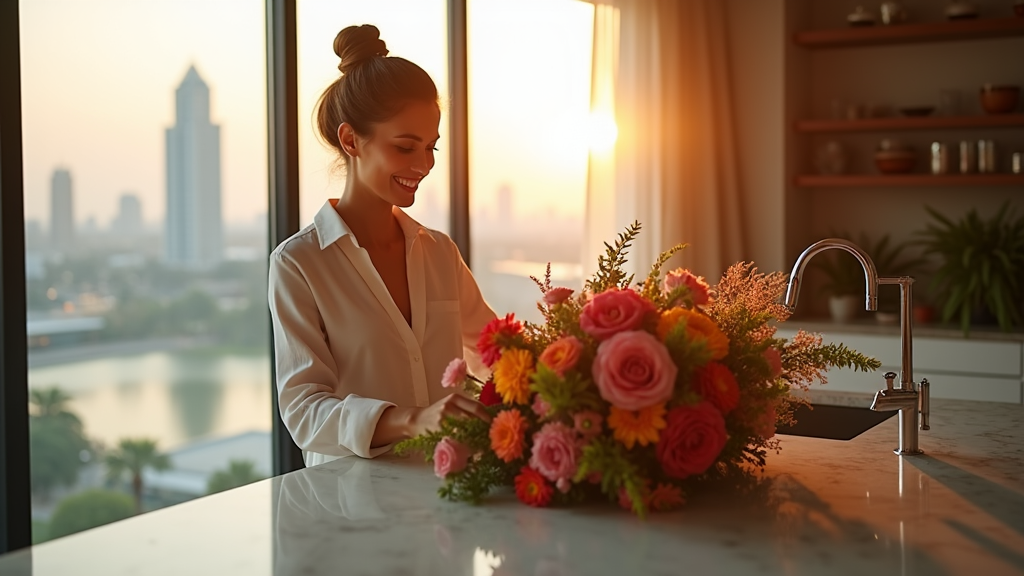
The Science of Flowers and Happiness: Why Blooms Boost Your Mood

Fresh blooms have a measurable impact on your emotional wellbeing — and science can prove it.
Every single person who received flowers in a landmark Rutgers University study responded with a genuine smile. Not a polite one — a real one. Researchers call it the Duchenne smile, the kind that crinkles the corners of your eyes and signals authentic joy. It happened across every age group, every personality type, without exception.
That study was just the beginning. Over the past two decades, researchers at Harvard, Rutgers, Texas A&M, and universities across Japan and Europe have been quietly building an extraordinary case: flowers don't just look beautiful — they change your brain chemistry, lower your stress hormones, and make you measurably happier.
Here's what the science actually says — and which blooms deliver the biggest mood boost.
The Rutgers Breakthrough: Flowers and Life Satisfaction
Professor Jeannette Haviland-Jones at Rutgers University conducted a 10-month behavioural study that changed how scientists think about flowers and emotion. The findings were striking on three levels.
First, the immediate impact. Every single participant — 100% — displayed a Duchenne smile upon receiving flowers, demonstrating extraordinary delight and gratitude. No other gift in the study produced this universal response.
Second, the long-term effect. Participants who kept flowers in their homes reported feeling significantly less depressed, anxious, and agitated over the study period. They demonstrated a measurably higher sense of enjoyment and life satisfaction.
Third — and this surprised the researchers — flowers increased social connection. Recipients placed flowers in shared spaces (living rooms, kitchens, entryways), not private ones, suggesting an instinctive desire to share the experience with others.
"Flowers bring about positive emotional feelings in those who enter a room. They make the space more welcoming and create a sharing environment."
— Professor Jeannette Haviland-Jones, Rutgers University
Harvard's Home Study: Flowers and Daily Emotional Health
Researchers at Harvard University took a different approach, studying what happens when people keep fresh flowers in their homes over an extended period. The results confirmed what florists have always suspected: the effect isn't fleeting.
Participants who lived with fresh flowers reported fewer episodes of negative emotions and more positive energy throughout the day. They felt less anxious in the mornings — a time when many people experience their highest stress levels. And they reported increased feelings of compassion and connection toward the people around them.

Harvard researchers found that flowers in the home reduce morning anxiety and increase positive energy throughout the day.
The Harvard study also found that participants who placed flowers where they could see them first thing in the morning — a bedroom nightstand or kitchen counter — reported the strongest effects. The first visual stimulus of your day, it turns out, matters enormously for setting your emotional baseline.
The Four-Minute Effect: How Quickly Flowers Change Your Body
Perhaps the most precise study came from Japan's Chiba University. Researchers placed 30 pink roses in front of 31 male office workers and measured their physiological response in real time. Within just four minutes of looking at the flowers, something measurable happened inside their bodies.
Parasympathetic nervous activity — the body's "rest and digest" system — increased by 21%. That's your body physically shifting from stress mode into calm mode, triggered by nothing more than looking at roses on a desk.
The psychological tests told the same story. Tension, anxiety, fatigue, and confusion all dropped significantly. Feelings of vigour and comfort increased. And this was a population of stressed office workers in Tokyo — not exactly people primed for relaxation.

Four minutes of looking at flowers on a desk increased parasympathetic nervous activity by 21% — physically shifting the body from stress to calm.
Bring the Science Home
Our hand-tied bouquets are designed to brighten any room — and now you know they'll brighten your mood, too.
Shop BouquetsFlowers at Work: The Productivity Connection
If flowers can shift your nervous system in four minutes, imagine what they do over an eight-hour workday. Texas A&M University ran an eight-month study with 101 participants to find out.
The results were clear. When flowers and plants were present in the workspace, men generated 15% more ideas during problem-solving tasks. Women produced more creative, flexible solutions to the same problems. Both groups demonstrated more innovative thinking overall compared to the flower-free control environment.
A separate field study by Cardiff University's School of Psychology confirmed it: enriching a "lean" office with plants increased productivity by 15%. Workers also reported significantly higher workplace satisfaction, better concentration, and improved perceived air quality.
For anyone managing a team in Dubai's fast-paced business environment, that's not decoration — it's a performance tool.
Which Flowers Boost Your Mood the Most?
Not all blooms are created equal when it comes to emotional impact. Research points to specific flowers — and specific colours — that deliver the strongest wellbeing benefits.

Lavender's scent is believed to increase dopamine and serotonin — the neurotransmitters responsible for feelings of contentment and calm.
Lavender — The Stress Eraser
Lavender's calming properties are among the most studied in botanical science. Its scent is believed to increase levels of dopamine and serotonin — the neurotransmitters directly linked to feelings of contentment and calm. Studies have shown it reduces blood pressure, slows heart rate, and significantly improves sleep quality. If you're dealing with insomnia or post-work stress, lavender on your nightstand is backed by real evidence.
Sunflowers — The Instant Mood Lift
Yellow flowers have a measurable relaxation effect within three minutes of viewing, according to research published in the Journal of Physiological Anthropology. Sunflowers, with their bold golden petals and association with warmth and optimism, are particularly effective. Their bright colour triggers dopamine release — the same "reward" chemical your brain produces when you eat something delicious or hear your favourite song.

Yellow flowers like sunflowers trigger dopamine release — the same "reward" chemical your brain produces when you hear your favourite song.
Roses — The All-Rounder
The Chiba University study used roses for good reason — they're among the most effective flowers for physiological relaxation. Pink roses in particular showed the strongest calming effect. Their scent has also been linked to headache relief and improved memory recall. There are over 30,000 varieties of roses worldwide, and they've been cultivated for their therapeutic properties since ancient Persian and Roman times. Browse our rose collection for arrangements designed to bring that calm into your home.
Jasmine — The Sleep Aid
Jasmine's sweet, exotic fragrance has been studied for its calming effects on anxiety and stress. Research has associated its scent with improved sleep quality and reduced feelings of sadness. In traditional Middle Eastern medicine, jasmine has been used for centuries as a natural mood enhancer — science is now confirming what the region's healers have long known.
Blue and Purple Blooms — The Deep Relaxers
A 2021 study published in the journal Indoor and Built Environment found that viewing blue and purple flowers significantly increased alpha brain waves — the neural pattern associated with calm, meditative states. They also increased parasympathetic nervous activity and produced significant improvements in feelings of comfort, relaxation, and cheerfulness. Think hydrangeas, delphiniums, and irises for creating a deeply calming atmosphere at home.
Where to Place Flowers for Maximum Wellbeing
Science doesn't just tell us which flowers to choose — it tells us where to put them. The placement matters more than most people realise.
The bedroom nightstand. Harvard's research showed that flowers visible upon waking had the strongest impact on morning mood. If you tend to wake up anxious or sluggish, a small arrangement of jasmine or soft pink roses beside your bed could genuinely shift your mornings. Our vase arrangements are perfect for bedside display.
Your office desk. The Chiba University study used desk-level flowers for good reason. Placing a small arrangement within your field of vision (not behind you) means your eyes naturally rest on it during micro-breaks. That four-minute parasympathetic response kicks in without you even trying.
The kitchen or dining area. The Rutgers study noted that people instinctively place flowers in shared spaces. Kitchens and dining tables are where families connect, and flowers amplify that sense of warmth and togetherness. A vibrant mixed bouquet on a dining table transforms the energy of every meal.
Your building's entrance. First impressions matter neurologically. Seeing flowers as you walk through your front door creates an immediate positive emotional cue, signalling to your brain that you're entering a safe, pleasant space. For Dubai apartments, consider our boxed arrangements for a stunning entryway statement.

The key mood-boosting blooms: sunflowers for energy, lavender for calm, roses for balance, and jasmine for restful sleep.
The Dubai Factor: Why Flowers Matter Even More Here
Living in Dubai adds extra dimensions to the flowers-and-wellbeing equation. The city's air-conditioned indoor lifestyle means most residents spend the majority of their day in sealed, artificial environments — exactly the kind of setting where flowers have been shown to have the strongest impact.
Dubai's fast-paced professional culture also makes stress management critical. With the Texas A&M data showing 15% more creative thinking when flowers are present, there's a real case for every office, co-working space, and home study in the city to have fresh blooms on the desk.
And there's a cultural resonance here too. Flowers have deep significance across the UAE's diverse communities — from the jasmine garlands of South Asian tradition to the rose water of Emirati hospitality. When you bring fresh flowers into your Dubai home, you're participating in centuries of cultural wisdom that science is only now catching up to.
Which Mood-Boosting Flower Is Right for You?
Answer three quick questions to find your perfect bloom.
1. What's your biggest daily challenge?
2. Where would you most like to feel better?
3. Which colours are you drawn to?
How to Maximise the Mood Benefits of Your Flowers
Based on the research, here are evidence-backed ways to get the most emotional benefit from the flowers in your home:
Keep them fresh. The studies measured responses to fresh, vibrant flowers — not wilting ones. Change the water every two days, trim stems at an angle, and keep arrangements away from direct heat or aircon vents. Our guide to keeping your roses fresh has detailed care tips.
Choose colour intentionally. Yellow for energy and optimism. Pink for calm and comfort. Purple for deep relaxation. White for clean, peaceful clarity. Match the colour to the mood you're trying to create in each room.
Place them at eye level. The Chiba University study placed flowers directly in participants' line of sight. Flowers on a high shelf or tucked in a corner won't deliver the same effect. Put them where your eyes naturally fall — desk level, coffee table height, or nightstand.
Include scented varieties. Visual beauty is powerful, but scent adds another neurological dimension. Lavender, jasmine, roses, and gardenia all have documented aromatherapeutic effects. If you can see and smell the flowers, you're engaging two mood-boosting pathways simultaneously.
Refresh regularly. The Harvard study tracked ongoing exposure, not one-off bouquets. Consistent presence of flowers in the home produced the strongest wellbeing results. A weekly flower delivery — like our signature bouquets — turns a nice gesture into a genuine wellness routine. Read more about why regular flower gifts strengthen relationships in our post on architectural flower styling.
Your Mood Deserves Fresh Flowers
Same-day luxury flower delivery across Dubai. Because science says you should.
Shop Best SellersFrequently Asked Questions
Do flowers really improve your mood, or is it just a placebo effect?
The evidence goes well beyond placebo. The Chiba University study measured physiological changes — a 21% increase in parasympathetic nervous activity — using heart rate variability monitors. These are objective, measurable shifts in your body's stress response that can't be faked. Multiple peer-reviewed studies across different countries and demographics have confirmed similar results.
How long does the mood-boosting effect of flowers last?
The immediate physiological response begins within minutes — the Japanese study showed effects within four minutes. The Rutgers 10-month study showed that the emotional benefits persisted throughout the study period, suggesting that regular exposure to fresh flowers provides ongoing mood support rather than a single spike.
What is the best flower colour for reducing anxiety?
Research points to purple and blue flowers as the most effective for reducing anxiety specifically. A 2021 study showed that these colours increase alpha brain waves associated with calm, meditative states. Yellow flowers are better for boosting energy and positive mood, while pink roses are the strongest all-round calming option.
Can artificial flowers provide the same mood benefits as real ones?
The studies specifically used fresh, real flowers. While artificial flowers may provide some visual pleasure, they lack the scent component that triggers neurological responses like dopamine and serotonin release. The Rutgers study also noted that the knowledge of receiving something living and natural contributed to the emotional response. Fresh flowers engage more senses and carry deeper psychological associations.
How many flowers do I need in my home to see a difference?
You don't need a room full. The Chiba University study used a single vase of 30 roses on a desk. The Harvard study participants kept modest arrangements in their homes. Even a small fresh bouquet placed where you'll see it regularly is enough to trigger the mood-boosting response. Quality and placement matter more than quantity.

Leave a comment
This site is protected by hCaptcha and the hCaptcha Privacy Policy and Terms of Service apply.