
Sculptural Flowers: The Art of Architectural Arrangements

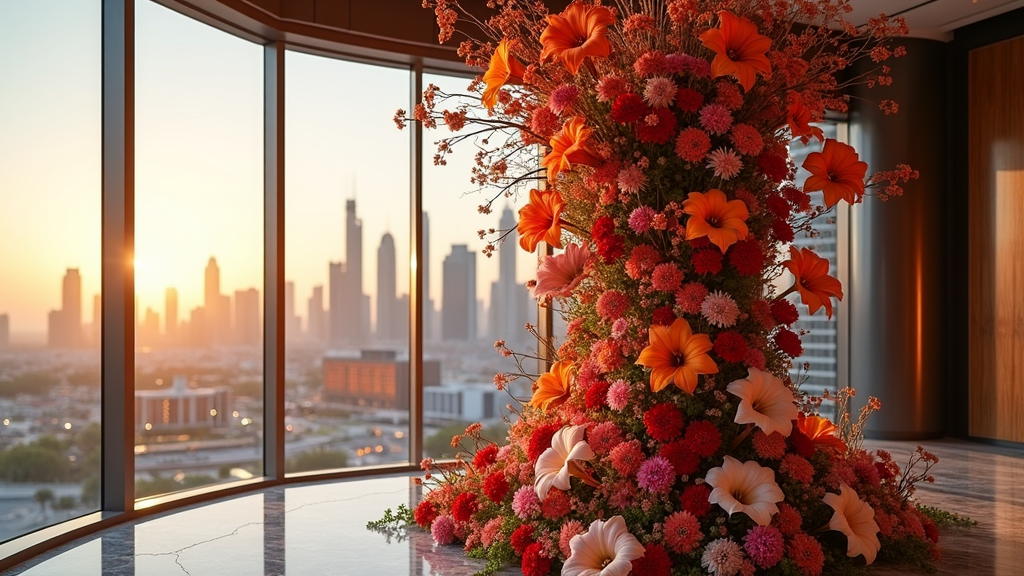
Architectural floral design is redefining how Dubai styles its living spaces in 2026.
Forget everything you thought you knew about flower arrangements. The days of plonking a dozen stems into a glass vase and calling it done are over. In 2026, flowers have become architecture — sculpted, suspended, and engineered to transform a room the way a piece of art does.
And this isn't niche. Data from over 6,000 floral consultations shows that requests for sculptural bouquets have surged by 383% year-over-year. The breakout star? Amaranthus, with a 285% increase in demand, prized for its cascading drape that no stiff-stemmed flower can replicate.
With Art Dubai returning to Madinat Jumeirah on 17–19 April for its 20th anniversary — featuring immersive installations that blur the line between art and environment — there's never been a better moment to bring that same sculptural energy into your own home.
"Bold design thrives on tension and precision, requiring masterful mechanics to craft striking contrasts."
— Florists' Review, 2026 Floral Trends Forecast
What Makes a Flower Arrangement "Sculptural"?
Traditional arrangements focus on colour and fullness — the more blooms crammed in, the better. Sculptural arrangements flip that logic entirely. They prioritise form, line, and the deliberate use of empty space. Every stem is placed with intention. The gaps between flowers matter as much as the flowers themselves.

Amaranthus — 2026's breakout stem — brings cascading texture that stiff flowers simply can't match.
Think of it like the difference between a packed bookshelf and a curated gallery wall. Both can be beautiful, but the gallery wall tells a story with what it includes and what it leaves out.
The approach draws heavily from Japanese ikebana, the centuries-old art of flower arranging rooted in Zen Buddhism. In ikebana, asymmetry is prized. Restraint is strength. A single branch placed at a precise angle can carry more visual weight than a bouquet of fifty roses.
The Five Sculptural Styles Defining 2026
Not all architectural arrangements look the same. The trend has branched — pun intended — into five distinct styles, each suited to different spaces and skill levels.
1. Ikebana-Inspired Minimalism
The purest expression of sculptural design. A single calla lily arching from a low ceramic vessel. Three branches of quince blossom positioned at asymmetric angles. The Japanese kenzan — a heavy brass pin frog that literally translates to "sword mountain" — holds each stem precisely in place while remaining visible as part of the design.
What makes this style so compelling for Dubai homes is its restraint. In spaces already filled with luxury finishes — marble, brass, rich textiles — an ikebana arrangement doesn't compete. It breathes.

The kenzan (flower frog) allows precise stem placement — and doubles as a design element in its own right.
2. Cascading Drama
This is where amaranthus earns its crown. Long, draping stems of green or burgundy amaranthus cascade over the edge of a vessel, creating a sense of movement and romance that static arrangements can't touch. Pair them with garden roses and trailing eucalyptus, and you've got a centrepiece that genuinely stops people mid-conversation.
The cascading style works brilliantly on dining tables, console tables, and fireplace mantels — anywhere the stems can flow downward and create visual drama without taking up too much horizontal space.
3. Vertical Towers
Eremurus — foxtail lily — is the backbone of this style. Its dramatic vertical spikes can reach over a metre, creating a living column that anchors a room. Add curly willow branches for organic structure, delphiniums for colour depth, and you've built something that feels more like sculpture than floristry.
This style is purpose-built for Dubai's generous floor spaces. Penthouse lobbies, villa entryways, and those sweeping living areas that need a focal point without furniture clutter.
4. Suspended Installations

Overhead floral installations turn any room into a living gallery.
The most ambitious style — and the one making waves at events across Dubai. Suspended installations hang overhead like floral chandeliers, using twisted branches, dried palms, orchids, and trailing amaranthus to create an immersive experience. Art Dubai's new "Bawwaba Extended" section, designed specifically for immersive large-scale installations, reflects this exact cultural moment.
You don't need a ballroom to pull this off. A smaller version hung above a dining table or in a bathroom can create the same gallery effect at a domestic scale.
5. Monochromatic Mass
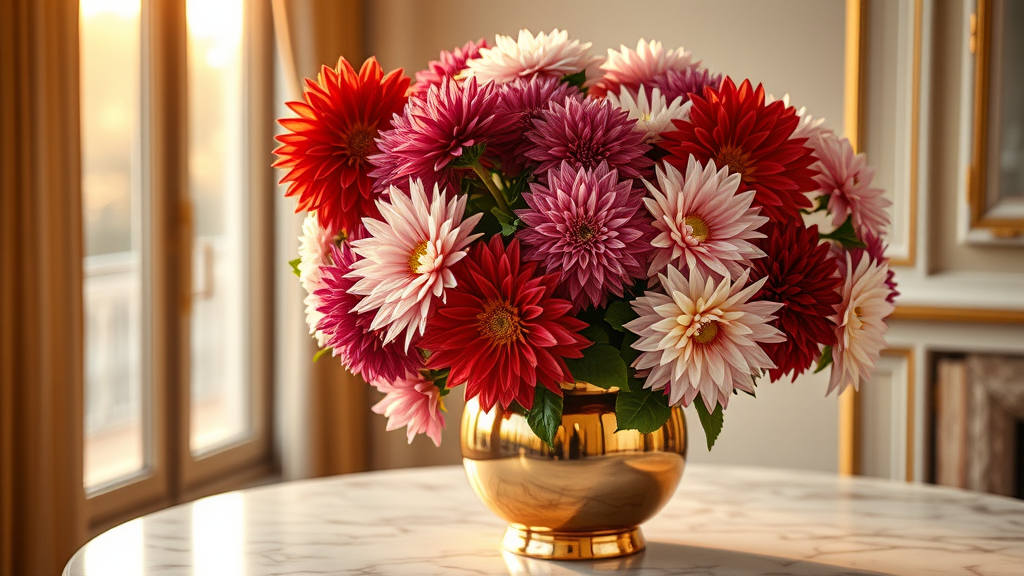
Perhaps the most accessible sculptural style. Choose one colour — all cream, all blush, all deep burgundy — and layer different flower varieties in varying shades of that single hue. Garden roses, ranunculus, lisianthus, and hydrangea in tonal cream, for example, create sophisticated depth through texture rather than colour contrast.
It's deceptively simple and endlessly elegant. The monochromatic approach is trending up 18% this year, with burgundy leading the charge.
Ready to Go Sculptural?
Our luxury arrangements feature the architectural stems, cascading textures, and premium blooms that define 2026's biggest trend.
Browse Our CollectionHow to Create a Sculptural Arrangement at Home
You don't need to be a professional florist. The beauty of this trend is that fewer stems means less room for error — and more room for impact.

Everything you need: a kenzan, pruning shears, a low vessel, and a few intentional stems.
Start with your vessel. Forget tall glass vases. Sculptural arrangements work best in low, wide ceramics — think shallow bowls, compote dishes, or even a flat stone slab. The vessel becomes part of the composition, not just a container.
Invest in a kenzan. These brass pin frogs have been used in Japan for over a century, and they're making a serious comeback in sustainable floristry. Unlike floral foam (which is essentially single-use plastic), a kenzan lasts forever. The pins hold each stem at exactly the angle you choose, and they naturally split the stem ends, helping flowers absorb more water and last longer.
Choose 2–3 stem types maximum. One structural element (branches, eremurus, or calla lilies), one textural element (amaranthus, eucalyptus, or dried palms), and one focal bloom (garden roses, orchids, or dahlias). That's it. The power is in the editing.
Work in odd numbers. Three stems, five branches, seven blooms. Odd groupings create natural asymmetry that feels organic rather than forced.
Leave space. This is the hardest part for most people. The instinct is to fill gaps. Resist it. The empty space between your stems is what makes the arrangement feel sculptural rather than stuffed.
Why Dubai Is the Perfect City for This Trend

Dubai's modern interiors and generous proportions are tailor-made for architectural floral design.
Dubai's architecture already thinks in sculptural terms. The city's skyline is a masterclass in form, line, and bold geometry. It makes sense that interior styling is following suit.
There's a practical element too. Research published in the Journal of Physiological Anthropology found that office workers with flowers in their workspace reported measurably lower anxiety and stress levels. A separate study by Texas A&M University showed that the presence of flowers and plants increased creativity, problem-solving ability, and overall productivity. In a city that moves at Dubai's pace, that's not decoration — that's infrastructure.
The climate also plays a role. With indoor living dominating for much of the year, residents invest heavily in their interior spaces. A sculptural floral piece isn't a nice-to-have — it's how you bring life and movement into a home that's designed to keep the heat out.
Which Sculptural Style Suits You?
Find Your Sculptural Style
Answer 4 quick questions to discover which architectural arrangement suits your space.
1. What best describes your living space?
The Stems to Know
Every sculptural arrangement starts with the right materials. Here are the five stems dominating the architectural floral movement in 2026:
Amaranthus — The undisputed star. Available in burgundy, green, and bleached white, its cascading form creates movement that no other stem can replicate. Pairs beautifully with mauve, plum, and champagne tones.
Calla Lilies — Their naturally curving stems and clean, trumpet-shaped blooms are inherently architectural. A single calla lily in a bud vase is a complete arrangement.
Eremurus (Foxtail Lily) — Dramatic vertical spikes that can reach impressive heights. The structural backbone of any tower-style arrangement.
Curly Willow — Naturally twisted branches that add organic geometry to any design. They dry beautifully too, extending the life of your arrangement indefinitely.
Orchids — Phalaenopsis orchids on their arching stems are sculptural by nature. Suspended or placed in a low vessel, they bring an effortless luxury that's hard to beat.
Send Sculptural Flowers Anywhere in Dubai
Same-day delivery. Premium stems. Arrangements designed to be noticed.
Order NowFrequently Asked Questions
What is a sculptural flower arrangement?
A sculptural flower arrangement prioritises form, line, and negative space over sheer volume. Rather than filling a vase with as many blooms as possible, sculptural designs use fewer, more intentional stems placed at precise angles — creating an effect closer to a piece of art than a traditional bouquet. The style draws inspiration from Japanese ikebana and modern architectural design.
What flowers work best for architectural arrangements?
Stems with strong natural lines work best: calla lilies (for their elegant curve), eremurus or foxtail lilies (for vertical drama), amaranthus (for cascading movement), orchids (for arching form), and structural branches like curly willow or quince. The key is choosing stems that have interesting shapes on their own, not just pretty blooms.
What is a kenzan and where can I buy one?
A kenzan — also called a flower frog or pin frog — is a heavy metal disc studded with brass pins, used in Japanese flower arranging for over a century. You place it at the bottom of a shallow vessel and press stems onto the pins to hold them at any angle. They're reusable, eco-friendly (unlike floral foam), and available from most floristry suppliers, Amazon, or specialist ikebana shops. Prices typically range from AED 30 to AED 150 depending on size.
How long do sculptural arrangements last?
Most fresh sculptural arrangements last 5–10 days with proper care — change the water every two days and recut stems at an angle. However, many sculptural styles incorporate dried elements (branches, palms, dried amaranthus) that last indefinitely. A mixed arrangement of fresh and dried elements gives you the best of both worlds: living beauty that evolves over time rather than simply wilting.
Can I get sculptural flower arrangements delivered in Dubai?
Yes — and the timing couldn't be better. With Dubai's growing appreciation for floral art (especially ahead of Art Dubai 2026), luxury florists are increasingly offering architectural and sculptural arrangements. Upscale & Posh delivers premium sculptural arrangements across Dubai, with same-day delivery available for orders placed before the cut-off time.
Further reading: Explore our guides on dahlia flower meanings and flower delivery in the UAE. Sources: Florists' Review 2026 Forecast, Poppy Flowers.

Leave a comment
This site is protected by hCaptcha and the hCaptcha Privacy Policy and Terms of Service apply.