
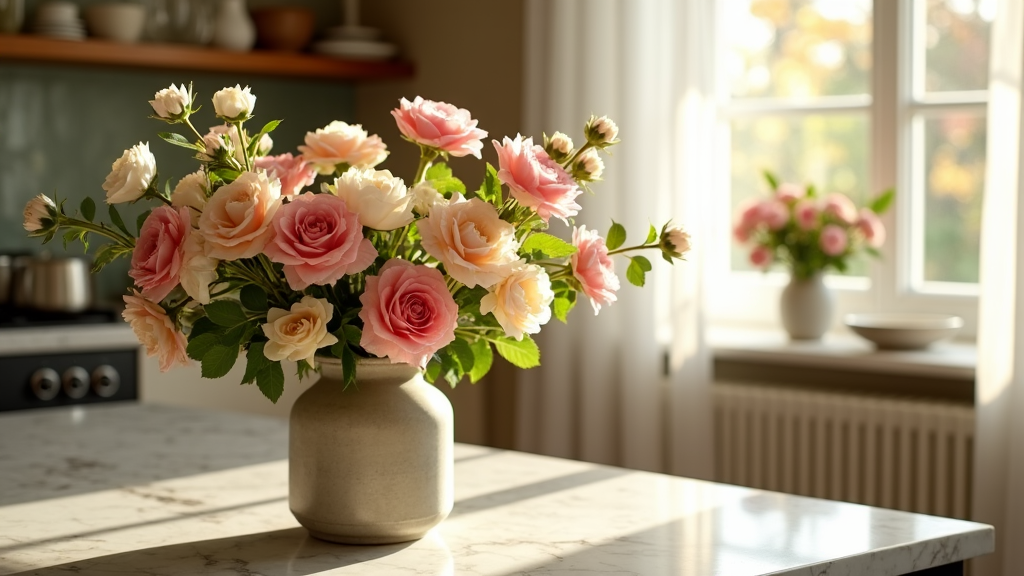
Farm to Vase: The Sustainable Flower Revolution Reaching Dubai

Seasonal blooms, consciously sourced — the new standard in luxury floristry.
The global cut flower industry moves $55 billion a year and produces an estimated 3 to 5 million tonnes of CO₂ annually. Most bouquets travel thousands of miles in refrigerated planes before reaching your door. But a quiet revolution is changing all of that — and it's arriving in Dubai.
The farm-to-vase movement, sometimes called "slow flowers," is reshaping how discerning buyers think about the blooms they bring into their homes. Much like farm-to-table dining transformed how we eat, this movement asks a simple question: where did your flowers actually come from?
The answer, for most people, is surprisingly complex — and once you understand it, you'll never look at a bouquet the same way again.
"The farm-to-vase movement isn't about sacrifice — it's about getting better flowers. Blooms that are fresher, more fragrant, and picked at their peak rather than bred to survive a 4,000-mile journey."
The Hidden Journey Behind Every Bouquet

Open-field flower farming: where the farm-to-vase story begins.
Here's something most flower buyers never consider: approximately 80% of cut flowers sold globally are imported. Colombia alone exports an estimated 660 million stems annually, with Ecuador, Kenya, and Sri Lanka close behind. Those roses on your desk likely boarded a refrigerated cargo plane, spent hours in a cold-chain distribution centre, and passed through multiple handlers before arriving at your local florist.
The environmental cost is significant. Air freight generates 50 to 150 times more emissions than sea freight per kilogram. A single rose grown in a heated Dutch glasshouse can carry a carbon footprint of up to 2.4 kg of CO₂ — roughly equivalent to driving a car for 10 kilometres. Multiply that by a bouquet of twenty-four stems, and you're looking at the carbon equivalent of a short road trip.
Then there's water. Flower farms are notoriously thirsty operations. Kenya's Lake Naivasha, the epicentre of East African floriculture, has reportedly lost half its water to surrounding flower greenhouses. And the pesticides used to keep blooms pristine during transit? They're applied at rates far higher than food crops, because cut flowers don't face the same regulatory scrutiny as produce.
What "Farm to Vase" Actually Means
The term was popularised by American author and advocate Debra Prinzing, who founded the Slow Flowers movement — a directory connecting buyers with local flower farmers and sustainably minded florists. The philosophy is straightforward: source flowers as close to home as possible, favour seasonal varieties over hothouse exotics, and eliminate the wasteful cold-chain logistics that dominate the industry.
Farm-to-vase flowers tend to be fresher (often cut the same day or day before delivery), more fragrant (because they haven't been bred purely for shelf life), and more varied (because growers experiment with heritage and unusual varieties that don't ship well over long distances).

Freshly cut stems — the hallmark of farm-to-vase quality.
The numbers back this up. Research from Cranfield University found that locally grown flowers in the UK carried roughly one-quarter the carbon footprint of imported Dutch equivalents — a British-grown lily produces 0.819 kg CO₂ per stem compared to over 3 kg for one shipped from the Netherlands.
How Dubai Is Joining the Movement

Hydroponic greenhouses in the UAE are proving that desert floriculture is not only possible — it's thriving.
You might think a desert city is the last place to grow flowers sustainably. You'd be wrong.
The UAE has made remarkable strides in controlled-environment agriculture, and flowers are part of that story. The UAE Flower Farm in Fujairah's Wadi Asimah cultivates over 50,000 blooms across rolling fields — proof that with the right approach, the Gulf can produce its own flowers rather than importing everything from East Africa and South America.
Hydroponic flower farming is the real game-changer for the region. These systems reduce water consumption by up to 90% compared to traditional soil-based growing — a critical advantage in a country where water is precious. Several commercial hydroponic farms across the UAE now produce roses, lilies, chrysanthemums, and seasonal varieties year-round in climate-controlled greenhouses.
The UAE government's push for food and agricultural security has further boosted local production. Native and heat-adapted species like Arabian jasmine, desert rose (Adenium obesum), bougainvillea, and flame trees are increasingly being incorporated into arrangements alongside imported stems — adding a distinctive regional character that you simply can't get from a mass-market import.
Explore Our Seasonal Collections
Thoughtfully sourced flowers, delivered fresh across Dubai and the UAE.
SHOP FLOWERSThe Carbon Cost: A Flower's Journey Compared
Not all flowers carry the same environmental baggage. Where and how they're grown makes an enormous difference. Here's how the carbon footprint stacks up per stem:
Locally sourced flowers can carry up to 24 times less carbon than heated-greenhouse imports.
Beyond Carbon: The Full Picture of Sustainable Floristry
Carbon is only part of the story. The sustainable flower movement also addresses several other environmental concerns that rarely make headlines.
The floral foam problem. That green spongy block florists use to anchor stems? It's called Oasis foam, and it doesn't biodegrade. It's essentially a single-use plastic that crumbles into microplastics and contains formaldehyde — a known carcinogen. Progressive florists have switched to alternatives: chicken wire, pin frogs (also called kenzans), curly willow structures, and moss-based mechanics that hold stems just as effectively without the environmental cost.
Packaging waste. Traditional flower delivery involves layers of plastic wrap, cellophane, synthetic ribbons, and sometimes foam inserts. Sustainable florists use recyclable kraft paper, cotton ribbons, compostable cellophane made from plant starch, and reusable vessels that become part of the gift.

The sustainable florist's toolkit: kraft paper, garden scissors, natural twine, and seasonal blooms.
Pollinator impact. Research from the University of Minnesota found that local cut flower farms provide meaningful nectar, pollen, and habitat resources to a diverse range of pollinators. When you buy from small-scale growers, you're supporting ecosystems that benefit bees, butterflies, and other vital species — something industrial monoculture farms simply can't match.
How to Choose More Sustainable Flowers
You don't need to become a sustainability expert to make better choices. A few simple questions can guide you toward greener blooms:
The 2026 Sustainable Flower Trends to Watch

Sustainable luxury: beautiful bouquets in eco-conscious packaging.
The farm-to-vase ethos is merging with broader design trends this year in exciting ways. Florists' Review named 2026 "a year of fearless design," and sustainability is woven through several of the year's biggest movements.
Textural mixing is one of the most visually striking trends — combining preserved elements like pampas grass and dried palms with fresh seasonal blooms. The contrast between soft petals and wild, dry textures creates arrangements that feel layered and intentional. And because the preserved elements last for months, there's far less waste involved.
Mono-species arrangements — bouquets using just one type of flower in varying stages of bloom — have surged in popularity. They celebrate the individual beauty of a single variety, reduce sourcing complexity, and often showcase whatever's at its peak locally. A vase of twenty garden roses in graduating shades of blush is currently more coveted than a mixed tropical extravaganza.
The foraged aesthetic is another natural extension of the movement. Arrangements incorporating herbs (rosemary, mint, basil), edible flowers, olive branches, and wild grasses blur the line between floral design and landscape. In Dubai, this translates beautifully: local herbs and native greenery adding a sense of place to every arrangement.
And then there's amaranthus — the breakout flower of the year, with requests up 383% year-over-year according to industry data. Its dramatic, cascading form is perfectly suited to the sculptural arrangement trend we covered recently, and it grows well in warm climates — making it an ideal candidate for local UAE cultivation.
Send Flowers Today
Hand-arranged bouquets, delivered fresh across Dubai with same-day service.
ORDER NOWWhat This Means for Dubai Flower Buyers
Dubai is uniquely positioned in the global flower supply chain. Sitting between the major growing regions of East Africa, South Asia, and Europe, the city has always had access to an extraordinary range of blooms. But proximity to growers doesn't automatically mean sustainability — it depends on which growers you're buying from and how they operate.
The good news is that awareness is rising fast. Dubai's luxury flower market is shifting toward consciously sourced arrangements, and buyers are increasingly asking the questions that matter: Where were these grown? How were they transported? What happens to the packaging?
For a city that's built its identity on forward-thinking innovation — from the science of floral wellbeing to cutting-edge vertical farming — embracing the farm-to-vase philosophy feels like a natural next step. It aligns with the UAE's broader sustainability commitments, its investment in controlled-environment agriculture, and its residents' growing appetite for luxury with purpose.
"Sustainability and luxury aren't opposing forces. The most discerning buyers understand that knowing where your flowers come from — and caring about the answer — is the ultimate mark of refinement."
Simple Steps You Can Take Today
Transitioning to more sustainable flower habits doesn't require a complete overhaul. Start small: next time you order flowers, ask your florist one question about sourcing. Choose seasonal varieties when you can. Opt for arrangements in reusable vases rather than disposable wrapping. And if you're really committed, try incorporating locally grown herbs or foliage into your home arrangements — rosemary, eucalyptus, and olive branches all thrive in the UAE climate and make stunning additions to any bouquet.
The beauty of the farm-to-vase movement is that it doesn't ask you to compromise on aesthetics. If anything, the flowers are more beautiful — more vibrant, more fragrant, more alive — because they haven't spent days in a cold chain. They've gone from field to your home in hours, not weeks. That freshness is something you can see, smell, and feel.
And that, ultimately, is the most compelling argument of all. Sustainable flowers aren't just better for the planet. They're better flowers, full stop.
Frequently Asked Questions
What does "farm to vase" mean?
Farm to vase refers to sourcing cut flowers as directly as possible from growers, favouring local and seasonal varieties over mass-imported blooms. It's the floral equivalent of farm-to-table dining — prioritising freshness, traceability, and reduced environmental impact throughout the supply chain.
Are sustainable flowers more expensive?
Not necessarily. While some locally grown heritage varieties can carry a premium, seasonal flowers are often more affordable than out-of-season imports that require hothouses and air freight. The real value is in freshness — sustainably sourced flowers typically last longer in the vase because they haven't endured days of transport and cold storage.
Can you grow flowers sustainably in the UAE's climate?
Yes. The UAE has invested significantly in hydroponic and controlled-environment agriculture. Hydroponic flower farming uses up to 90% less water than traditional growing methods. The UAE Flower Farm in Fujairah grows over 50,000 blooms, and several commercial operations produce roses, lilies, and chrysanthemums year-round in climate-controlled facilities.
What is floral foam and why is it a problem?
Floral foam (often sold under the brand name Oasis) is a phenol-formaldehyde plastic used to anchor stems in arrangements. It doesn't biodegrade, crumbles into microplastics, and contains known carcinogens. Sustainable alternatives include chicken wire, pin frogs (metal disc holders), moss, and curly willow structures — all of which work effectively and can be reused or composted.
Which flowers are in season in Dubai during spring?
Spring (March to May) is one of the best seasons for flowers in the UAE. Roses, jasmine, chrysanthemums, marigolds, petunias, and bougainvillea all thrive during this period. Native species like Arabian jasmine and desert rose (Adenium obesum) are also at their peak. As temperatures rise toward summer, heat-tolerant varieties like plumeria and hibiscus take centre stage.
Sources: Cranfield University lifecycle analysis, Sustainable Floristry Network, University of Minnesota Department of Horticultural Science, FoodPrint, TED Ideas, Flowers from the Farm UK. Flower trend data from Florists' Review 2026 Forecast, The Knot, Blooms by the Box.

Leave a comment
This site is protected by hCaptcha and the hCaptcha Privacy Policy and Terms of Service apply.