
The Monochrome Bouquet: Why Single-Colour Arrangements Rule 2026

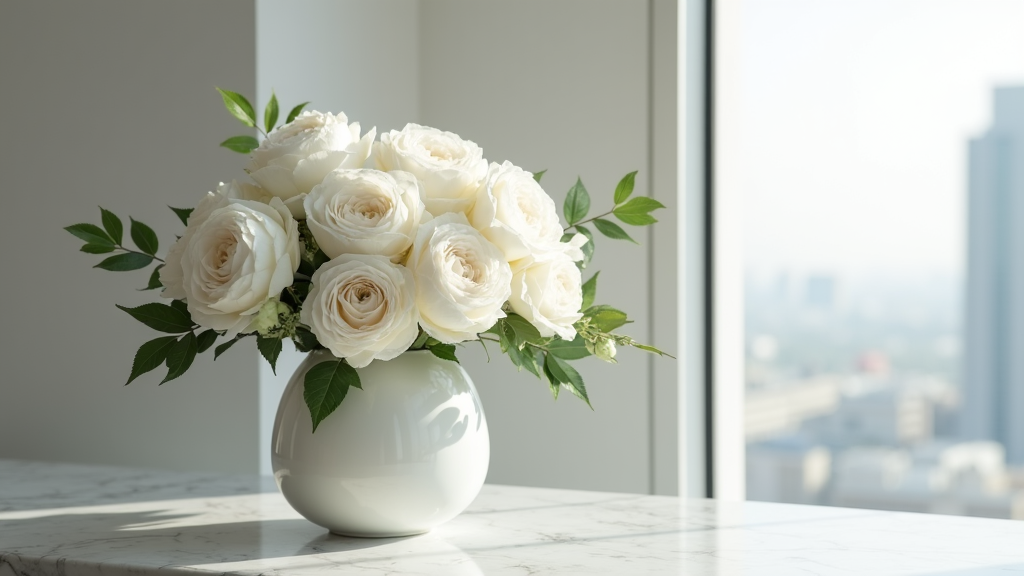
The all-white arrangement: where texture becomes the star and colour steps aside.
There’s a quiet revolution happening in floristry right now. While maximalist, rainbow-hued bouquets still have their moment, the most talked-about trend of 2026 is their polar opposite: the monochromatic arrangement. One colour family. Multiple textures. Zero visual noise.
It’s the floral equivalent of wearing head-to-toe black — and somehow looking more striking than everyone else in the room.
The Florists’ Review 2026 trend forecast identifies this as part of their “DUNA” (Dune) trend — minimalistic designs that celebrate visual restraint, where texture and form do the heavy lifting. And it’s not just an industry niche. From wedding editorial shoots in Dubai to corporate lobby installations in DIFC, monochromatic arrangements are everywhere this year.
So what’s driving this shift? And more importantly, how do you create one that doesn’t look like you simply forgot to add colour?
Why Monochromatic Works: The Science Behind the Simplicity
This isn’t just an aesthetic choice — there’s real psychology at play. A 2021 study published in the International Journal of Environmental Research and Public Health measured physiological responses of 50 participants viewing different coloured flower arrangements. The findings were striking.
Participants viewing single-colour yellow arrangements showed alpha brainwave power of 0.48 ± 0.07, compared to just 0.35 ± 0.06 for mixed-colour white displays — indicating significantly deeper relaxation. Their skin conductance (a stress marker) dropped to 1.43, versus 2.41 for varied arrangements.
“Three minutes of observation and meditation on single-colour flowers produced strong positive immediate impacts on mood disturbance, vigour, and stress markers.”
— PMC/NIH Research, International Journal of Environmental Research and Public Health
The takeaway? When your eye doesn’t have to process competing hues, it relaxes. It notices texture, shape, the way light falls across a petal. A monochromatic arrangement doesn’t compete for your attention — it holds it.

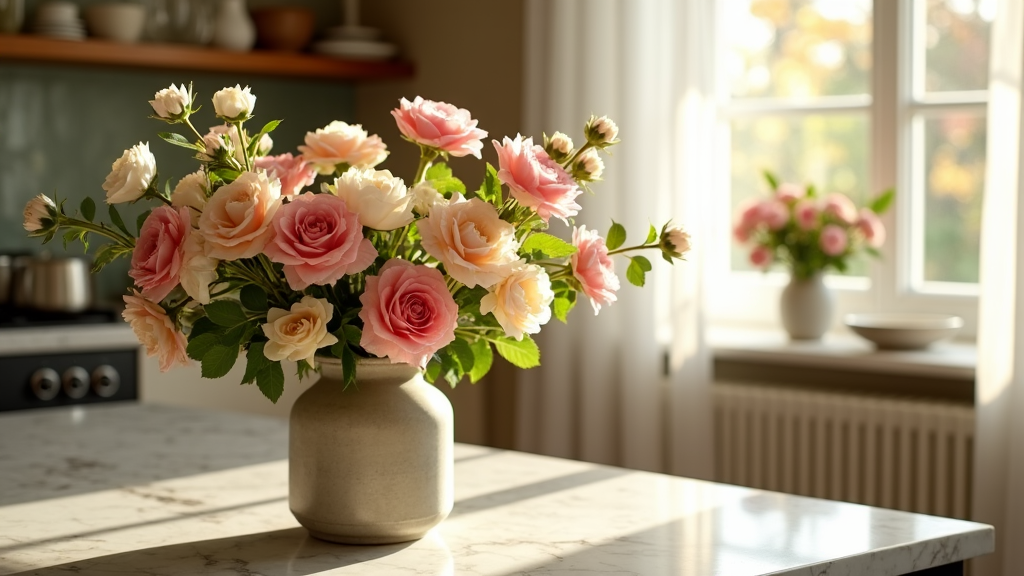
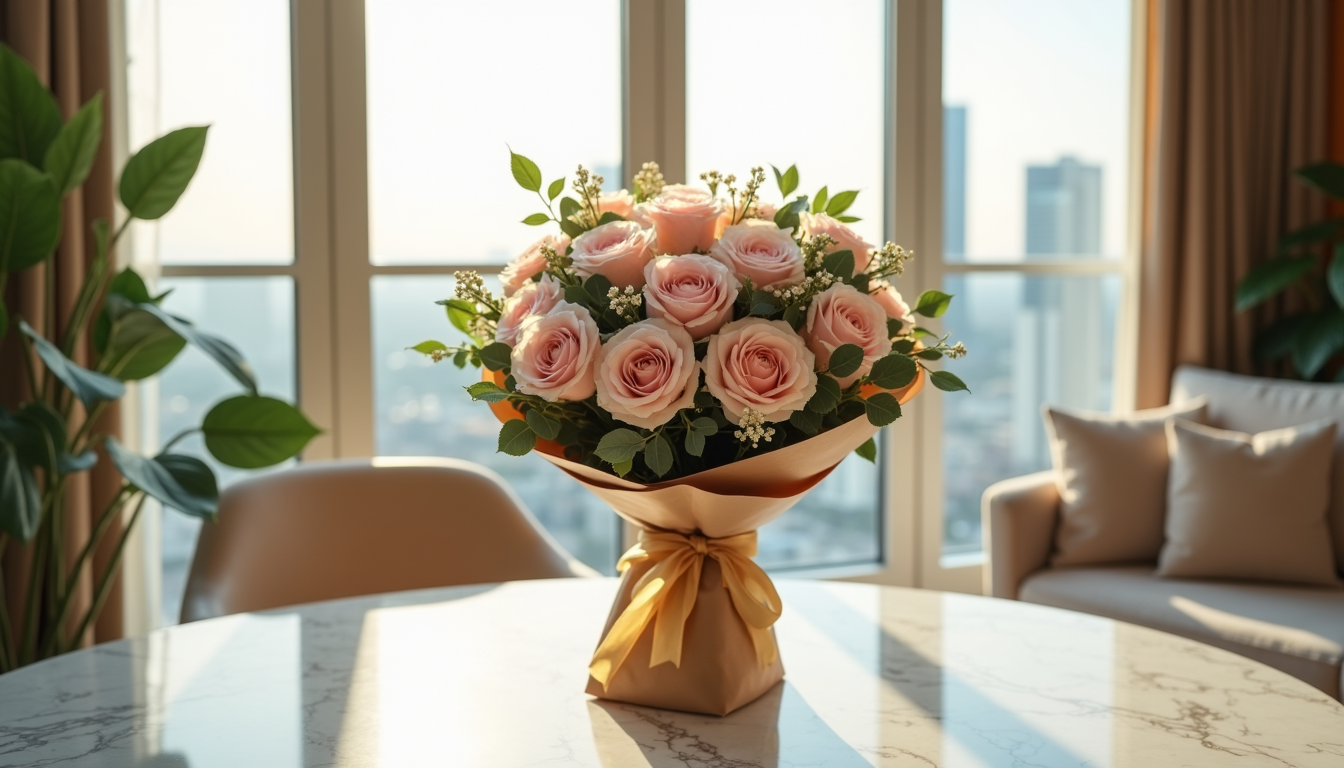
A tonal blush arrangement moves from pale pink to deep rose, creating depth without a single contrasting hue.
The Five Monochromatic Palettes Worth Mastering
Not all single-colour schemes are created equal. Each palette carries its own mood, and some are better suited to certain settings than others. Here are the five that are defining 2026 floral design.
1. All-White: The Timeless Power Move
White-on-white has never gone out of style, but in 2026 it’s being elevated with textural complexity. Think garden roses paired with lisianthus, white ranunculus, and feathery astilbe — all white, but each bloom offering a completely different surface quality. The key is variety in form: ruffled petals next to smooth buds, trailing elements next to tight clusters.
Where it works best: corporate events, hotel lobbies, white flower gifts for housewarmings, and modern minimalist interiors.
2. Blush to Berry: The Romantic Gradient
This palette plays with every shade from the palest blush to deep rose and raspberry. It’s a single hue stretched across its entire tonal range. Garden roses in ‘Quicksand’ (a dusty nude-pink) sit alongside hot-pink peonies and pale sweet peas. The effect is romantic without being saccharine.
Where it works best: anniversaries, romantic gestures, wedding table centrepieces, and bedroom arrangements.
3. Burgundy and Wine: Moody Sophistication
Deep reds, maroons, and plum shades are having a major moment. Dark ranunculus, ‘Black Baccara’ roses, burgundy dahlias, and chocolate cosmos create arrangements that feel like old-world oil paintings come to life. This palette absorbs light beautifully, making it ideal for candlelit settings.
Where it works best: evening events, luxury restaurants, dramatic interior styling, and winter celebrations.

The velvety depth of a wine-red monochrome: ‘Black Baccara’ roses and dark ranunculus in intimate detail.
4. Sunshine Yellow: The Mood Lifter
Remember that study? Yellow flowers produced the strongest relaxation and mood-boosting response of any colour tested. An all-yellow arrangement — sunflowers, golden ranunculus, yellow tulips, chamomile, and craspedia (billy balls) — is more than cheerful. It’s measurably therapeutic.
Where it works best: get-well gifts, office reception desks, kitchen tables, and brightening up Dubai’s air-conditioned interiors.

The art of assembly: sunflowers, golden ranunculus, tulips, and chamomile before they become one unified arrangement.
5. All-Green: The Botanical Statement
No flowers required — or rather, only green ones. Green hydrangeas, bells of Ireland, green chrysanthemums, and masses of textural foliage (eucalyptus, ferns, ruscus, aspidistra leaves) create something that feels lush, modern, and almost architectural. It’s the arrangement that says “I understand design.”
Where it works best: contemporary offices, spa environments, and plant lovers’ homes.

The all-green palette: botanical, architectural, and unmistakably modern against a Dubai skyline.
Monochrome Palette Mood Guide
How to Style a Monochromatic Arrangement Like a Pro
The biggest mistake people make with single-colour arrangements is treating them like regular bouquets minus the variety. They’re not. They require a completely different approach to look intentional rather than accidental.
Layer your tones. Don’t use one shade — use every shade within your chosen family. A blush arrangement should move from near-white through nude-pink to deep rose. This tonal graduation creates the depth that colour contrast normally provides.
Vary your textures obsessively. This is where monochromatic arrangements live or die. Pair something smooth (a rose) with something spiky (a thistle), something fluffy (astilbe) with something structured (an anthurium). The Plants & Flowers Foundation of Holland recommends combining “at least three to five different textures” in every single-hue arrangement.
Play with scale. Mix large focal flowers with tiny filler blooms. A giant white dahlia next to clusters of white waxflower. A single dramatic peony amid a cloud of baby’s breath. The size variation prevents the eye from glazing over.
Don’t forget negative space. Resist the urge to pack stems tightly. Monochromatic arrangements benefit from breathing room — the space between blooms becomes as much a design element as the flowers themselves.
Choose your foliage wisely. Silver-toned foliage like dusty miller works beautifully with cool palettes (whites, blues, lavenders). Rich green ruscus or deep emerald ferns complement warm tones (reds, oranges, yellows). Eucalyptus is the universal translator — it works with everything.
Ready to Go Monochrome?
Our florists craft bespoke single-colour arrangements delivered across Dubai.
BROWSE ARRANGEMENTSThe Dubai Factor: Why Monochrome Suits This City
Dubai’s interior design aesthetic has always leaned toward the refined. Clean lines, marble surfaces, neutral palettes with gold accents — the city’s homes and hotels practically demand arrangements that complement rather than compete with their surroundings.
A monochromatic bouquet does exactly that. An all-white arrangement on a Carrara marble console in a JBR apartment. A deep burgundy cluster on a dark walnut dining table in Dubai Hills. Golden yellows brightening a Desert Springs villa’s majlis. These arrangements feel like they belong, rather than sitting on top of a design scheme.
There’s a practical consideration too. Dubai’s flower markets — particularly those supplying from the Netherlands, Ecuador, and Kenya — now stock an extraordinary range of varieties within each colour family. Twenty years ago, “white flowers” meant roses and lilies. Today, you can source white ranunculus, white anemones, white lisianthus, white scabiosa, and white hellebores — all on the same order.
That variety-within-a-colour is what makes modern monochromatic arrangements possible at a level they simply weren’t before.
Which Monochrome Palette Matches Your Style?
Answer three quick questions to find your perfect single-colour arrangement.
1. How would you describe your home’s overall feel?
2. What mood do you want your flowers to create?
3. Pick your ideal Saturday morning:
Four Rules for Gifting Monochromatic Flowers
Sending a monochromatic arrangement as a gift carries a different weight to a mixed bouquet. It feels curated. Considered. Here’s how to get it right.
Match the palette to the recipient’s space. If you know their home is filled with warm wood tones and cream furnishings, a blush or yellow arrangement will integrate perfectly. Dark, contemporary interiors? Go burgundy or white.
Size matters more with one colour. A single-hue arrangement needs enough blooms to create visual impact. Too few stems in one colour and it looks sparse rather than intentional. Aim for at least 20–25 stems for a proper statement.
Add a textural surprise. Even within a monochromatic scheme, one unexpected element can elevate the whole arrangement. A single dried palm spray in an all-white bouquet. A cluster of blackberries in a burgundy composition. Something that makes the recipient pause and look closer.
Let the card reference the choice. A note like “Twenty shades of the colour that reminded me of you” turns a beautiful arrangement into a meaningful one.
Send a Monochrome Statement
Same-day delivery across Dubai. Handcrafted by our master florists.
SHOP LUXURY FLOWERSWhat the Experts Are Saying
The shift toward monochromatic isn’t a passing fad — it’s a design maturation. The Florists’ Review 2026 forecast describes it as part of a broader movement toward “fearless design” — the confidence to strip back rather than pile on. Their DUNA trend specifically celebrates “simple, minimalistic designs” that let individual elements “breathe and shine.”
The Blooms by the Box 2026 forecast identifies four dominant colour stories — earthy luxe, sunlit citrus, romantic pastels, and moody jewel tones — each of which lends itself naturally to monochromatic interpretation. The trend isn’t about removing colour from floristry; it’s about giving a single colour the stage to express its full range.
Wedding floristry is accelerating this trend fastest. THE WED magazine identifies single-species and single-colour bouquets as one of 14 major trends for 2026, noting that “couples are embracing a grounded aesthetic rooted in nature with soft, neutral flowers.”
Caring for Your Monochromatic Arrangement
A single-colour arrangement reveals every flaw. One wilting bloom stands out far more when there’s nothing else to distract the eye. Here’s how to keep yours looking pristine.
Trim all stems at a 45-degree angle before placing them in water — this maximises water uptake. Change the water every two days (daily in Dubai’s warmth). Remove any bloom the moment it starts to turn; in a monochromatic arrangement, a browning rose disrupts the entire visual story. Keep the arrangement out of direct sunlight and away from air conditioning vents, which dry petals rapidly.
For white arrangements specifically, watch for water spots on petals. Mist lightly from a distance rather than up close. For dark arrangements (burgundy, deep red), they photograph best in indirect light — direct sunlight washes out the richness that makes them special.
If you’re interested in the science of keeping flowers fresh, our earlier post on the science of flowers and happiness covers why tending to your blooms is good for more than just the vase life.
Frequently Asked Questions
What is a monochromatic flower arrangement?
A monochromatic flower arrangement uses flowers in varying shades, tones, and tints of a single colour family. Rather than mixing different hues, it relies on textural variety and tonal depth — from the palest shade to the deepest — to create visual interest and a cohesive, sophisticated look.
Do monochromatic arrangements cost more than mixed-colour bouquets?
Not necessarily. The cost depends on the flowers chosen rather than the colour scheme. A monochromatic arrangement of seasonal blooms can be very cost-effective because florists can source in bulk from a single colour family. Premium varieties like garden roses or peonies will push the price up regardless of whether the arrangement is mono or mixed.
Which monochromatic colour is best for a gift when you don’t know the recipient’s preference?
White is the safest choice — it’s universally elegant and complements any interior style. If you want something warmer and more personal, blush pink is the next most versatile option. Yellow is ideal for uplifting gifts (get-well, congratulations), while burgundy works best when you know the recipient appreciates dramatic, moody aesthetics.
How many stems do you need for a good monochromatic arrangement?
For a proper monochromatic statement, aim for 20–30 stems minimum. The arrangement relies on density and tonal variation to look intentional. Fewer than 15 stems in a single colour can appear sparse. For larger statement pieces (table centrepieces, lobby displays), 40–60 stems create genuine impact.
Can I add greenery to a monochromatic arrangement without breaking the single-colour rule?
Yes. Foliage is generally considered a supporting structural element rather than a colour, so adding eucalyptus, ruscus, or dusty miller to a monochromatic arrangement won’t break the scheme. In fact, florists recommend it — foliage provides essential contrast that helps the main colour pop. The exception is an all-green arrangement, where the foliage itself becomes the colour story.
Read more: Sculptural Flowers: The Art of Architectural Arrangements • Farm to Vase: The Sustainable Flower Revolution Reaching Dubai

Leave a comment
This site is protected by hCaptcha and the hCaptcha Privacy Policy and Terms of Service apply.