
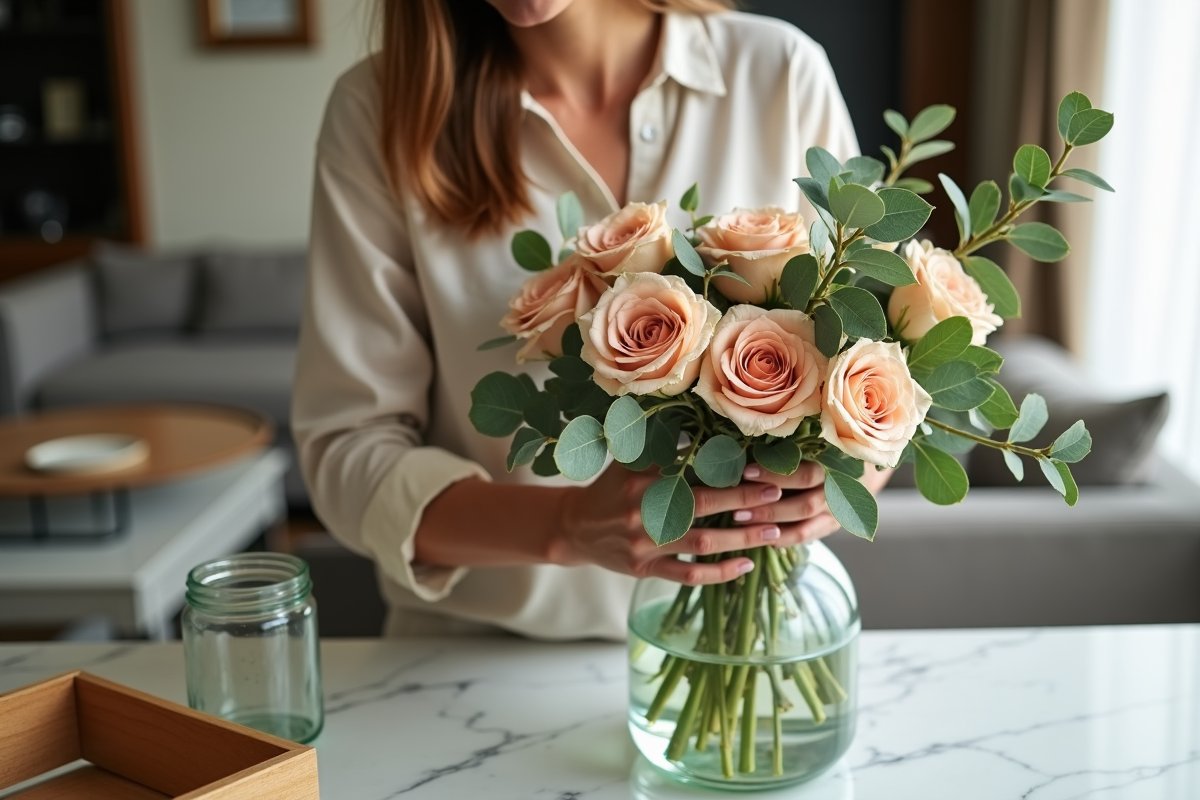
What to Do With Dead Flowers: 12 Ways to Reuse, Compost and Repurpose Your Bouquet in Dubai (2026)
What to do with dead flowers: strip the petals for potpourri or a rose water rinse, compost the stems if you can, save any healthy blooms as a mini posy, and put floral foam and plastic wrap in general waste, not the bin marked recycling. Almost nothing from a bouquet needs to go straight in the bin, and in a Dubai apartment, most of it still has a second life. Upscale & Posh is Dubai's luxury flower delivery service, and we spend our days thinking about what happens to a bouquet after the "wow" moment fades. This guide covers what to do next, once the vase water has turned and the petals start to drop.

First: is your bouquet actually dead?
Before you reach for the bin, check the stems. Crisp, firm stems with a head that's simply drooping usually mean the flower is thirsty, not finished. A fresh trim, a change of water and a cooler spot out of direct sun and AC blast can bring it back for a few more days. Our guide to keeping cut flowers fresh in Dubai covers the full revival routine.
Slimy stems, a sour smell from the vase, or petals that have gone brown and papery are the real signs of the end. That bouquet is done reviving, but it's not done being useful. Everything below is for that stage.
12 things to do with dead flowers
Skip the Slump Between Bouquets
A fresh delivery is always the fastest fix for a fading arrangement.
Shop the Signature Collection1. Salvage a mini posy
Pull out anything still holding its shape and group it in a small glass or teacup. One sentence: the easiest reuse is simply keeping what's still alive and letting the rest go. A full bouquet rarely dies all at once; roses often hold on longer than hydrangea or tulips, so you can usually rescue three or four stems worth keeping on your desk or bathroom shelf for a few more days.
This buys you time before you have to deal with the rest, and it means nothing gets thrown out while it still has life left in it.
2. Make potpourri
Dry the petals flat on a tray or paper towel for a few days, then mix with a few drops of essential oil for a bowl of natural, long-lasting scent. Dubai's dry AC air is actually an advantage here. Spread rose, lavender or peony petals somewhere out of direct sun, away from humidity, and they'll dry within days rather than weeks.
Once dry, store in a jar or leave loose in a bowl in a hallway or bathroom. Refresh the scent every so often with a drop of oil. Our flower preservation guide covers full air-drying and pressing techniques if you want blooms to last well beyond a bowl of potpourri.

3. Make petal confetti
Dried petals from roses, hydrangea or baby's breath make natural, biodegradable confetti for a party, proposal photo or garden celebration. Spread petals on a tray in a shaded spot for two to three days until they feel papery and light, not soft.
Store them in a paper bag until you need them. Unlike plastic confetti, they break down naturally outdoors, which matters if the celebration is happening on a beach or in a park.

4. Make a rose water or petal bath soak
Simmer rose or peony petals gently in water, strain, and you have a simple homemade rose water for skin or a scented bath. Use a low simmer rather than a rolling boil to protect the fragrance, and let it cool fully before using it on skin. Keep it in the fridge and use within a few days, since it has no preservatives. It's a nice way to get one more use out of petals that are past their best but not yet brown.
5. Try a natural dye
Simmered petals from roses, hydrangea or peonies release soft colour that can tint paper, fabric or eggs. Results are gentle and inconsistent rather than vivid and reliable, which is part of the charm. A cotton napkin or watercolour paper will pick up colour more readily than synthetic fabric.
This is a good one for a slow weekend project rather than something with a guaranteed outcome, but it's a genuinely different use for petals that would otherwise be composted.
6. Use flower water on plants (sometimes)
Plain vase water with no preservative packet, no aspirin and no cloudiness can be poured onto hardy garden or balcony plants, but skip it if the water is murky or smells off. Cloudy or smelly water usually carries bacteria that won't do a plant any favours, and any water dosed with flower food or a preservative sachet should go down the drain, not onto soil.
When in doubt, tip it away and give the plant fresh water instead. This is a small, easy habit rather than a major sustainability move, but every bit helps in a city where irrigation water is a real cost.
7. Use stems as garden or pot mulch
Snap woody stems like rose or eucalyptus into short pieces and lay them on top of soil in a pot or planter as a light mulch layer. They break down slowly and help the soil hold moisture, which matters more here than almost anywhere given how fast pots dry out in the heat.
This only works if you actually have a pot plant or balcony garden to use it on. If you don't, skip straight to composting or the bin.
8. Donate still-fresh stems
If a bouquet isn't dead at all, just no longer wanted, hospitals, salons, offices and community centres will often take fresh stems off your hands. A quick call ahead is worth it, since not every venue accepts loose flowers, but many welcome a simple arrangement that still has days left in it.
This is really a "before it dies" option rather than a repurposing step, but it's worth mentioning because donating is the single best use of a bouquet that still has life in it.
9. Reuse the vase or ceramic
Once the flowers are gone, the vase isn't rubbish. Wash it out and use it for a new bouquet, kitchen utensils, brushes, or as a simple ceramic planter for a small plant. A good vase easily outlasts a dozen bouquets. Our bouquets with vase arrive in pieces worth keeping for exactly this reason.
10. Sort and bin the packaging properly
Paper wrap and card can usually go in your building's paper recycling, ribbon can be reused for gift wrapping, and floral foam belongs in general waste, never down the sink and never in compost. Floral foam is a petroleum-based plastic that crumbles into microplastic fragments and does not biodegrade, so it needs to leave the house in the regular rubbish, sealed if you can manage it, so the crumbs don't scatter.
Cellophane and plastic sleeves also go in general waste unless your building specifically accepts film plastic for recycling, which many don't. Check with your building or Dubai Municipality if you're unsure what your specific recycling stream takes.
11. Air-dry or press for keepsakes
A quick option for a couple of sentimental stems: hang them upside down somewhere dry and dark, or press them flat in a heavy book, and they'll keep their shape for months. This works best on roses, lavender and eucalyptus rather than soft, water-heavy blooms like lilies or hydrangea. For a full walkthrough on drying, pressing and resin work, our preserving flowers guide covers it in depth.
12. Compost what's left
Whatever's left after all of the above, mostly limp stems and spent petals, can go into compost rather than the bin, as long as you have somewhere to put it. Cut flowers are roughly 90% water, so they break down quickly once composted, but a Dubai apartment rarely has a garden bed waiting for them. The next section covers exactly how this works when you live upstairs, not on a plot.
Composting dead flowers in a Dubai apartment
Composting is the obvious answer everywhere else, and it's still a good one here, but the apartment reality changes the method. A traditional outdoor compost heap needs space, airflow and time that most Dubai homes simply don't have, and the heat can turn an open pile into a smell problem fast.
A countertop or under-sink bokashi bin is the practical fix. Bokashi ferments kitchen and floral waste in a sealed container using a bran inoculant, so it doesn't rely on airflow or outdoor space, and it handles heat far better than open composting. It won't smell if it's sealed properly, and the fermented output can be buried in a pot of soil or handed to anyone with a garden.
If bokashi feels like too much kit, look for a community garden or urban farm near you that accepts food and floral waste drop-offs. A growing number of Dubai communities run these, and most are happy to take dead flowers alongside vegetable peelings. Municipal waste streams vary by building and area, so check with your building management or Dubai Municipality before assuming garden waste is collected separately. Don't assume; a quick message to your building's facilities team settles it either way.

Which flowers work best for each use
| Flower | Best reuse | Notes |
|---|---|---|
| Roses | Potpourri, rose water, drying | Petals hold scent and colour well; stems can be mulch once woody |
| Eucalyptus | Air-drying, mulch | Dries naturally with little effort and keeps its scent for months |
| Lavender | Potpourri, sachets | Dries fast in Dubai's AC air and keeps scent longer than most petals |
| Hydrangea | Confetti, natural dye | Petals are papery and light once dry, good for scattering |
| Peonies | Petal bath soak, dye | Soft petals bruise easily; use while still supple, not once brown |
| Lilies | Confetti or compost only | Toxic to cats; keep loose petals and pollen well away from pets |
| Sunflowers | Compost, mulch | Thick stems take longer to break down; snap into short pieces first |
| Tulips | Compost | High water content means they wilt fast and don't dry cleanly |
| Baby's breath | Confetti, dried arrangements | Dries beautifully on its own and holds shape for a long time |
Buying flowers that last longer in the first place
The best way to reduce what ends up in the bin is to start with a bouquet built to last. Three things make the biggest difference.
Choose sturdier varieties. Roses, eucalyptus and lavender all tend to outlast soft, high-water blooms like tulips or hydrangea in Dubai's heat and AC. Our roses collection is a solid starting point if longevity matters more than variety.
Ask about how the bouquet was sourced. We cover this in more detail in our piece on sustainable flowers in Dubai, but freshness at the point of cutting has a direct effect on how many days you get at home.
Consider something that doesn't die at all. A living plant from our plant gifts collection sidesteps the whole question, or a dried arrangement from our 2026 dried flowers guide gives you the look of fresh blooms with none of the composting decisions. A vase gift from our bouquets with vase range also means less waste once the flowers themselves are done, since the vase stays in use long after.
FAQ
Can you compost flowers?
Yes, cut flowers compost well since they're mostly water and break down quickly. Petals, soft stems and leaves are all fine for compost or a bokashi bin. Skip anything treated with floral foam, wire, or synthetic preservative packets, and check with your building or Dubai Municipality if you're relying on a shared composting scheme.
Can you put dead flowers in the recycling bin?
No, dead flowers themselves aren't recyclable; they're organic waste and belong in compost or general waste, not the recycling stream. The paper wrap, card sleeve or cardboard box a bouquet arrives in usually can go in paper recycling. Check with your building or Dubai Municipality for exactly what your local stream accepts.
Is floral foam biodegradable?
No, floral foam is a petroleum-based plastic that crumbles into microplastic pieces and does not biodegrade, even though it looks and feels like soil. It should go into general waste, never down the sink and never into compost or a garden bed, since the fragments persist in soil and waterways.
How long do dried petals keep?
Properly dried petals kept away from humidity and direct sunlight can hold their colour and shape for several months, sometimes longer for sturdy varieties like lavender or eucalyptus. Scent fades faster than appearance, so refresh potpourri with a drop of essential oil every few weeks to keep it working.
Can I use old flower water on plants?
Only if the water is clear, doesn't smell, and has never had a flower food sachet added to it. Cloudy, smelly or treated water carries bacteria or chemicals that can harm soil and plants. When in doubt, pour it away and give your plant fresh water instead; it's a small habit, not a major fix.
What do florists do with unsold flowers?
Most florists compost unsold stock, donate still-fresh flowers to hospitals, salons or community groups, or repurpose petals into dried arrangements and potpourri. At Upscale & Posh, we plan orders closely around demand to keep unsold stock low in the first place, which matters more than what happens after the fact.
Ready for Your Next Bouquet?
Choose blooms built to last, delivered across Dubai in 2026.
Shop the Signature Collection
%0A%0AWhat%20to%20do%20with%20dead%20flowers:%20strip%20the%20petals%20for%20potpourri%20or%20a%20rose%20water%20rinse,%20compost%20the%20...)
Leave a comment
This site is protected by hCaptcha and the hCaptcha Privacy Policy and Terms of Service apply.