
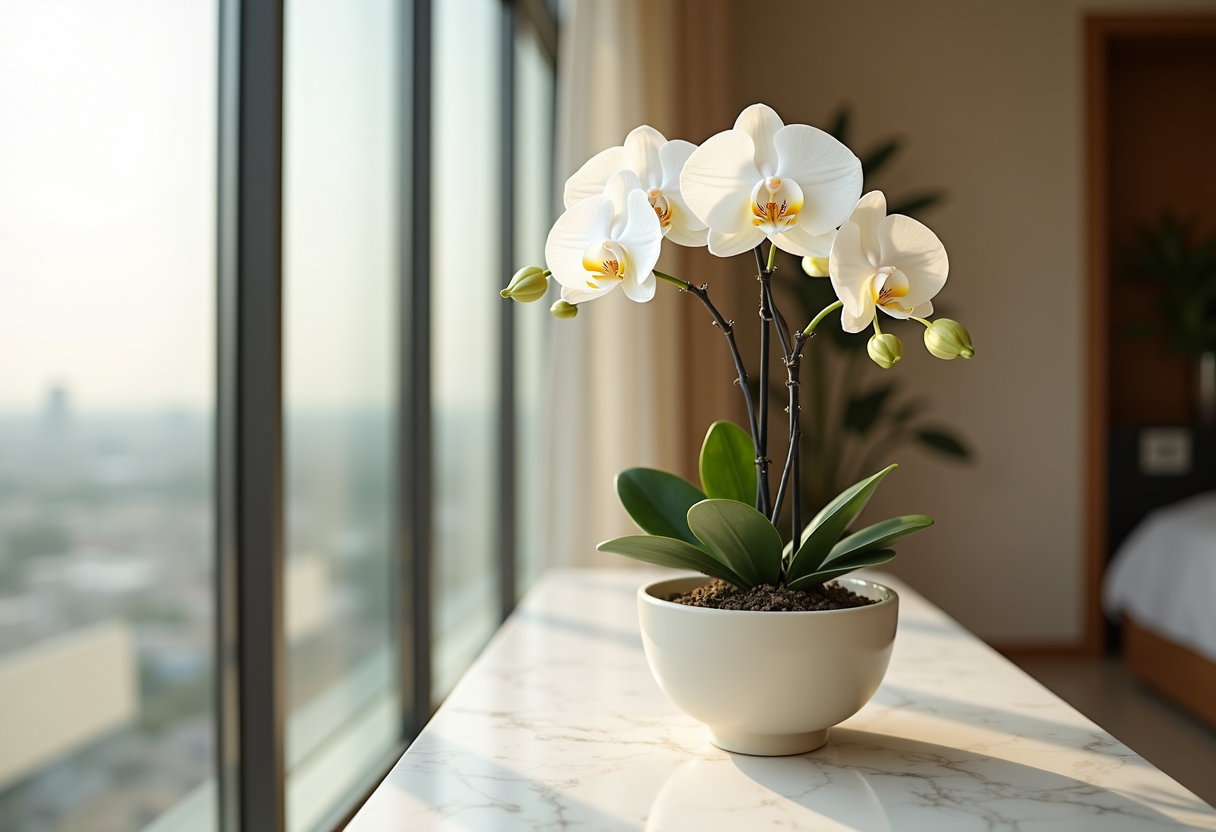
How to Care for Orchids in Dubai: A Florist's Complete Guide to Keeping Them Alive & Reblooming
An orchid is the plant people are most afraid to own and most reluctant to throw away. It arrives looking impossibly elegant, blooms for weeks, then drops its flowers — and the owner quietly assumes it's dead. It almost never is. In Dubai, where homes run on air conditioning eleven months a year and tap water is some of the hardest in the world, orchids fail for reasons that have nothing to do with the plant and everything to do with the room it's standing in.
Upscale & Posh is Dubai's luxury flower and plant delivery service, and the Phalaenopsis orchid is one of our most-gifted plants. We deliver hundreds of them across the city, which means we also field the questions that come a month later: why are the leaves going soft, when do I water it, will it ever flower again? This guide answers all of it — written specifically for Dubai's climate, not a temperate European greenhouse.
How do you care for an orchid? Place it in bright, indirect light, water it thoroughly once every 7–10 days (let it drain completely — never leave it sitting in water), keep it at 18–29°C away from direct AC airflow, and feed it a weak orchid fertiliser every second watering. A healthy Phalaenopsis will live 10–15 years and rebloom once or twice a year.
First, know which orchid you have
The orchid family is the largest flowering plant family on earth, with more than 25,000 species. You almost certainly own a Phalaenopsis — the "moth orchid" — because it's the variety sold in nearly every supermarket, garden centre and florist, including ours. It's also, conveniently, the most forgiving orchid you can buy, which is why it's the one this guide focuses on.
The care principles below apply to most house orchids, but here's a quick orientation if you're unsure:
- Phalaenopsis (moth orchid) — flat, rounded blooms on an arching spike; broad, leathery leaves. The easiest and most common. The default in any orchid gift or arrangement.
- Dendrobium — tall canes with clustered flowers; slightly thirstier and likes more light.
- Cymbidium — strappy grass-like leaves and sprays of waxy flowers; prefers cooler nights, which makes it harder in Dubai.
- Cattleya — the classic "corsage" orchid; large, fragrant, wants bright light.
- Vanda & Oncidium — specialist orchids usually grown by hobbyists, not everyday gift plants.
If your orchid has wide green leaves and the flowers look like hovering moths, treat it as a Phalaenopsis and you'll be right. Want to understand what its colour signifies before you read on? We covered that in our guide to orchid meaning and symbolism.
The 7-step orchid care routine
Get these seven things right and your orchid will thrive. Everything else is detail.
1. Light: bright but indirect
Orchids want bright, filtered light — never harsh direct sun. The American Orchid Society's rule of thumb is simple: if the leaves are dark green, the plant wants more light; if they're yellowish or reddish, it's getting too much. In a Dubai home, an east-facing windowsill or a spot a metre back from a bright south or west window, behind a sheer curtain, is ideal. Direct summer sun through Dubai glass will scorch the leaves within hours.
2. Water: less often than you think
Overwatering kills far more orchids than underwatering. A Phalaenopsis needs a thorough soak roughly once every 7–10 days — never a daily splash. The roots must dry out between waterings. We cover the exact method in the watering section below, because it's the single most important thing you'll do.
3. Humidity: the Dubai weak point
Orchids are tropical and prefer 50–70% humidity. An air-conditioned Dubai apartment often sits at 30–40% — drier than the plant likes. Sit the pot on a shallow tray of pebbles topped up with water (the pot stays above the waterline), group it with other plants, or keep it in a bathroom with a window. A light misting of the leaves and aerial roots two or three times a week helps, as long as water doesn't pool in the crown.

4. Temperature: steady, and off the cold draught
Phalaenopsis are happiest between 18°C and 29°C — comfortable room temperature for most of the year here. The mistake in Dubai is placement: an orchid sitting directly under an AC vent gets blasted with cold, dry air that shocks the plant and dries the roots unevenly. Keep it out of the direct airflow. Equally, don't leave it on a balcony or by a window in peak summer, where afternoon heat can climb well past anything the plant can tolerate.
5. Feeding: weakly, weekly
Orchids are light feeders. The growers' mantra is "weakly, weekly" — a quarter-to-half-strength orchid fertiliser at every second watering during active growth, then less in the cooler months when the plant rests. Flush the pot with plain water once a month to clear out any built-up fertiliser salts, which matters more in Dubai because hard water leaves mineral deposits behind.
6. Potting medium & roots: bark, not soil
Orchids are not planted in soil — they grow in chunky bark, sphagnum moss or a specialist orchid mix that lets air reach the roots. Healthy roots are plump and silvery-green; a mushy brown or hollow root is rotting, usually from overwatering. Most Phalaenopsis come in a clear pot for a reason: it lets you see the roots and lets light reach them. Repot every 1–2 years, ideally after flowering, when the bark breaks down and stops draining freely.
7. Air circulation
In the wild, orchids cling to trees with their roots in open air. Stagnant, humid air around the crown invites rot and fungal spots. Gentle airflow — a cracked window, a ceiling fan on low — keeps the plant healthy. This is the one area where Dubai's air conditioning helps, as long as the orchid isn't directly in the cold stream.
The one-line version: bright indirect light, a deep drink every 7–10 days with full drainage, steady warmth off the AC vent, and a weak feed every fortnight. Do that and the rest takes care of itself.
How to water an orchid (the part everyone gets wrong)
If you only master one skill, make it watering. The goal is to soak the roots, then let them dry. Here is the method our florists use and recommend to every customer:
- Take the orchid to the sink. Run room-temperature water through the bark for 15–30 seconds, letting it pour out of the drainage holes. This soaks the roots and flushes out salts.
- Let it drain completely. Leave the pot in the sink for a few minutes until no more water drips. Water trapped at the base will rot the roots.
- Never leave it standing in water. If your orchid sits inside a decorative outer pot, tip out any water that collects there. This is the most common killer of gifted orchids.
- Wait until it's nearly dry before the next water. Stick a finger into the bark — if it's still damp, wait. In Dubai's AC dryness that's usually every 7 days; in a humid bathroom it may be every 10–14.

How often should I water my orchid? As a rule, once every 7–10 days for a Phalaenopsis. Roots that are bright green have plenty of water; silvery-grey roots are telling you it's time. Skip the ice cube trick. The popular "three ice cubes a week" method is convenient but flawed — orchids are tropical plants and the cold can shock the roots. Room-temperature water, applied properly, is always better.
A note specific to Dubai: our tap water is hard and high in salts, which build up in the bark over time. If your orchid looks tired despite good care, water it with filtered, RO or bottled water for a month and flush the pot well. Many "mystery decline" orchids in Dubai are simply suffering from mineral build-up.
Why orchids struggle in Dubai homes — and how to fix it
Most orchid-care advice online is written for temperate climates and quietly assumes a humid, naturally-lit home. Dubai is a different environment, and four local factors account for almost every orchid that fails here:
- Air conditioning dries the air. Constant AC pulls humidity down to 30–40%. Counter it with a pebble tray, grouping, light misting, or a small humidifier nearby.
- Cold AC draughts shock the plant. An orchid under a vent gets a steady blast of cold, dry air. Move it out of the airflow — this single change rescues more orchids than any other.
- Hard water leaves salt deposits. Dubai's mineral-heavy water builds up in the bark. Flush monthly and use filtered water if you can.
- Summer heat by windows and on balconies. From May to September, direct sun through glass turns a windowsill into an oven. Keep orchids in bright but filtered interior light through the hot months.
Get those four right and a Dubai apartment is genuinely a good home for an orchid — warm, stable and bright. If you're building a wider indoor collection, our guide to the best indoor plants for Dubai pairs beautifully with an orchid.
How to get an orchid to rebloom
This is the question that separates people who keep orchids from people who replace them. When a Phalaenopsis finishes flowering and drops its blooms, it is not dead — it's resting. With the right prompt, the same plant will flower again, often more generously than the first time.
Here's how to trigger a rebloom:
- Decide what to do with the spent flower spike. Once all the flowers have dropped, you have two options. If the spike is still green, cut it just above a node (one of the small bumps) lower down the stem — a new branch may emerge from there. If the spike has turned brown and dry, cut it off at the base; the plant will grow a fresh spike when it's ready.
- Keep caring for it as normal. Continue watering and feeding through the resting phase. The plant is quietly building energy in its leaves and roots.
- Give it a cool-night trigger. Phalaenopsis are prompted to spike by a drop in night-time temperature of around 5–8°C for a few weeks. In Dubai you can recreate this in the cooler winter months, or by moving the plant to a slightly cooler room at night. This temperature dip is the single biggest signal that tells the orchid it's time to flower again.
- Be patient. A new spike can take a couple of months to appear and develop. Healthy leaves and firm green roots mean it's coming.
A well-kept Phalaenopsis will rebloom once or twice a year and can keep doing so for over a decade. The plant you were about to throw away is often a year from its best display.
Orchid troubleshooting: reading the signs
An orchid tells you what's wrong through its leaves and roots. Use this table to diagnose the most common problems:
| What you see | Likely cause | What to do |
|---|---|---|
| Soft, wrinkled, limp leaves | Under-watering or root damage from over-watering | Check the roots. Plump & green = water more; mushy & brown = root rot, repot in fresh bark |
| Yellowing leaves | Too much direct light, or natural shedding of the oldest lower leaf | Move out of direct sun. One lower leaf yellowing occasionally is normal |
| No new flowers | Not enough light, or no cool-night trigger | Increase indirect light and give a night-time temperature drop |
| Mushy brown roots | Over-watering / sitting in water | Trim dead roots, repot in dry bark, water less often |
| Limp leaves but green crown | Cold AC draught or shock | Move away from the vent to a stable, warm spot |
| White crust on bark/pot | Hard-water mineral build-up | Flush with filtered water; switch to RO water |
Where to buy orchids in Dubai
A well-grown orchid is only as good as the plant you start with. At Upscale & Posh we deliver real, fresh Phalaenopsis orchid plants across Dubai — single and double-stem in white and blush, ready to flower and built to last for years with the care above. They arrive presentation-ready, which is why they're one of our most popular luxury gifts for new homes, congratulations and corporate thank-yous.
Our single-stem Phalaenopsis is the perfect place to start a collection, while the Ashbourne orchid plant gift makes a statement that lasts far longer than a cut bouquet. Browse the full range in our plants collection.

Send a living luxury gift
Same-day orchid plant delivery across Dubai. Fresh, elegant and built to last.
Shop Orchid PlantsOrchid care FAQ
How often should I water my orchid in Dubai?
Roughly once every 7–10 days. Dubai's air conditioning dries the air, so check the bark and roots rather than following a fixed schedule — water when the bark is nearly dry and the roots have turned silvery-green. Always soak thoroughly over a sink and let every drop drain away.
Why are my orchid's leaves turning yellow?
The most common cause is too much direct light — move the plant to bright but filtered light. If it's only the oldest, lowest leaf yellowing and the rest look healthy, that's normal shedding. Widespread yellowing combined with soft leaves usually points to root problems from over-watering.
How do I get my orchid to rebloom?
After flowering, cut the spent spike (above a node if still green, at the base if brown), keep watering and feeding, and give the plant a night-time temperature drop of around 5–8°C for a few weeks. This cool-night trigger prompts a new flower spike. A healthy Phalaenopsis reblooms once or twice a year.
Should I use ice cubes to water my orchid?
No. Orchids are tropical plants, and cold water from ice cubes can shock the roots. Use room-temperature water and soak the roots properly over a sink instead. The ice-cube method is convenient but not what's best for the plant.
How long do orchids live?
A well-cared-for Phalaenopsis orchid can live 10–15 years or longer, reblooming every year. Orchids are long-lived plants — with the right light, watering and a seasonal cool-night trigger, the same plant will flower again and again for over a decade.
Luxury flowers & plants, delivered across Dubai
From fresh orchids to signature bouquets — same-day delivery, beautifully presented.
Shop Best Sellers

Leave a comment
This site is protected by hCaptcha and the hCaptcha Privacy Policy and Terms of Service apply.